

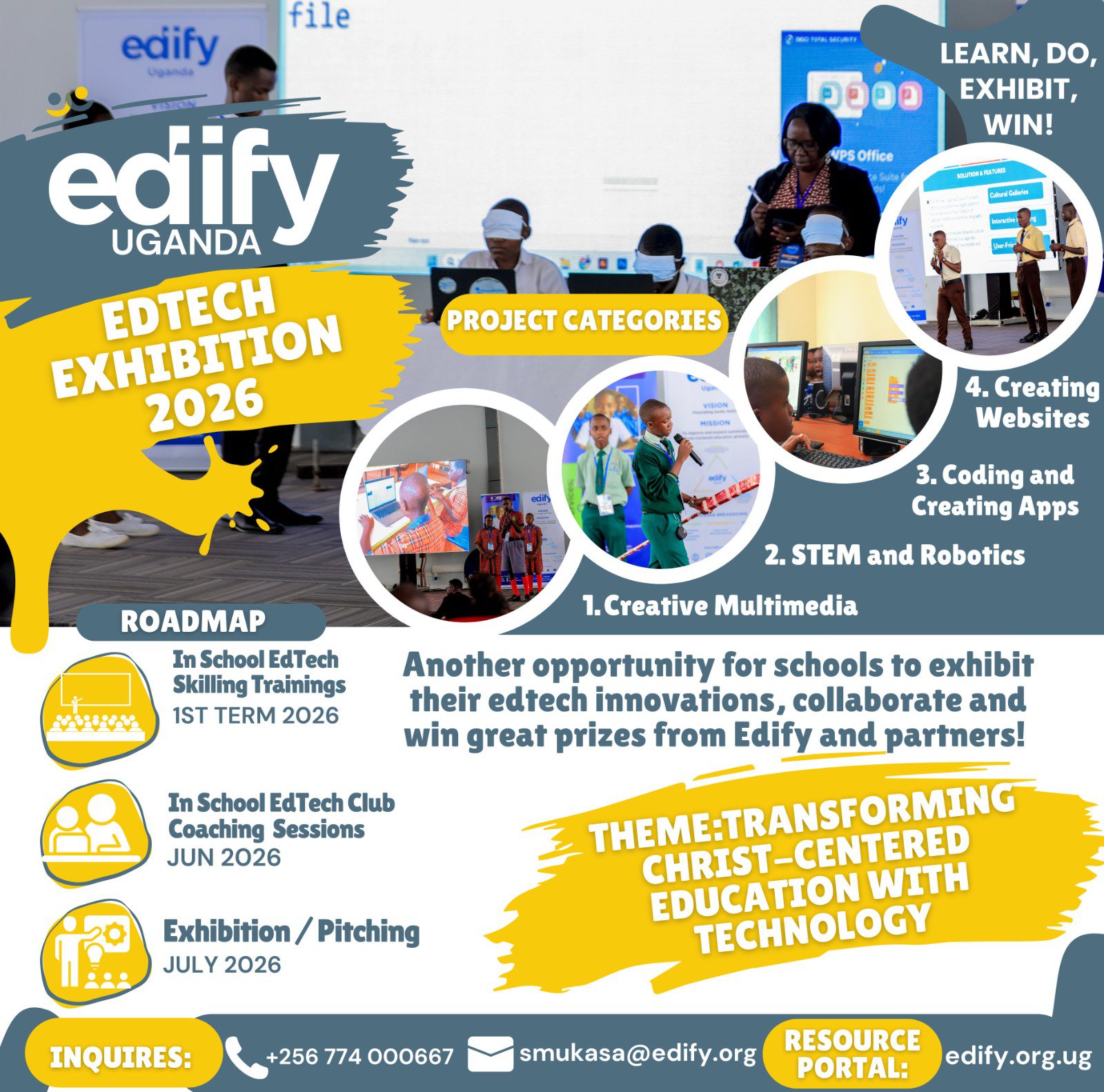
On 10 July 2026, Makerere University in Kampala became a meeting point for young innovators, teachers, school leaders, education partners and technology enthusiasts as the Edify EdTech Exhibition 2026 brought learner creativity and technology into the spotlight.
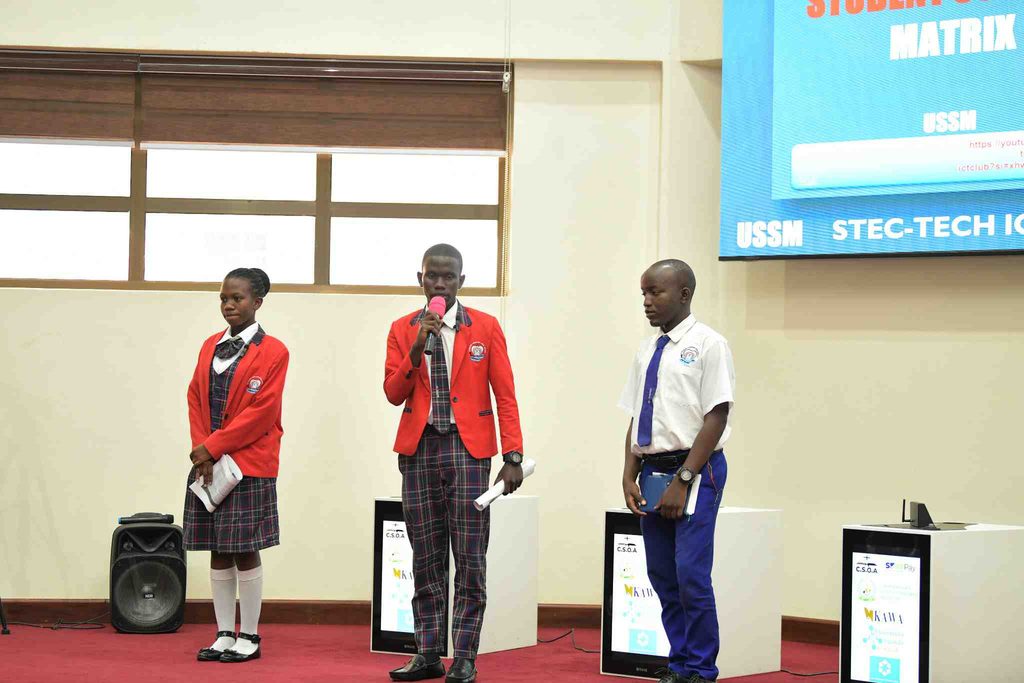
Held at the School of Public Health Auditorium under the theme “Transforming Christ-centered Education with Technology,” the exhibition provided a platform for learners to demonstrate how digital skills can be used to understand real-world challenges, develop solutions and communicate ideas with confidence.
The exhibition was more than a one-day showcase. It represented the culmination of a journey in which learners had been encouraged to explore technology through school-based EdTech Clubs, develop projects and prepare to present their ideas to a wider audience.
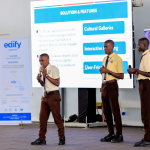
Learners, teachers and education partners gathered to celebrate creativity, digital skills and innovation at the Edify EdTech Exhibition 2026.
From classrooms to a national stage
The journey towards the 2026 exhibition began with a call for schools to develop and submit EdTech projects. The response demonstrated a growing interest among learners and schools in using technology as a tool for creativity and problem-solving.
More than 60 project submissions were received from schools across Uganda. Following a technical review, 26 projects were shortlisted for the final exhibition. The shortlist included 13 primary schools and 13 secondary schools, bringing together projects developed by learners from different school communities.
The official invitation explained that the shortlist was necessary to allow the selected teams adequate time to present, demonstrate and receive feedback on their projects. Shortlisted learners were encouraged to bring functional solutions, tangible prototypes and devices for exhibition and demonstration.
Read the official 2026 shortlist and invitation
The exhibition therefore represented more than the final presentation of finished products. It was part of a wider process of helping learners move from learning about technology to using technology to create.
More than 60 ideas, 26 projects shortlisted
The diversity of the shortlisted projects offered a glimpse into the kinds of problems young people can explore when they are given opportunities to develop digital skills.
The primary school projects included Voice Buddy, Heart Talk, Virtual Piano, Healthful Living Through Technology, Computer Dojo, DivineDeeds, EduChrist, Stand Up, Speak Out: Ending Bullying, Smart Community Watch, Destiny Robot Learning Assistant, and Luganda Hymn Lyrics.
Secondary school learners presented projects including Interactive Periodic Table Explorer, a web-based academic administration and physics calculation and learning system, Protect Me App, My Cyber Shield, Digital Discipleship, a web-based E-Voting System, Bible Memory Challenge System, AquaTrack, Mosquito Shield, and Smart Digital Learning Hub.
Together, these projects demonstrate the wide range of ways learners can apply technology—from education and health to safety, community participation, environmental concerns, Christian values and student wellbeing.
Rather than learning technology simply as a collection of computer applications, the learners were challenged to think about problems, users, solutions and impact.
That approach is at the heart of meaningful EdTech.
Young innovators solving real problems
One of the most important aspects of the exhibition was its emphasis on identifying real challenges and designing technology-based responses.
Projects such as Stand Up, Speak Out: Ending Bullying, Protect Me App, My Cyber Shield and Smart Community Watch show learners thinking about safety and responsible communities.
Other projects focused on learning and education. The Interactive Periodic Table Explorer, Destiny Robot Learning Assistant and Smart Digital Learning Hub demonstrate different ways technology can support learning experiences.
There were also projects addressing health and environmental concerns, including Healthful Living Through Technology, AquaTrack and Mosquito Shield.
The exhibition therefore created an opportunity for learners to ask an important question:
How can technology help us make a difference in the places where we live and learn?
Destiny Preparatory school Learners demonstrate how their Robotic project was created from scratch and how its solving their identified problem
Behind the projects was a broad range of digital skills.
The EdTech programme exposed learners to areas such as creative digital content, coding and app development, website development, STEM and robotics, project development and communication.
Depending on the project, learners could work with tools and technologies such as Scratch, MIT App Inventor, WordPress, Google Sites, HTML, CSS, Micro:bit, Arduino, LEGO WeDo, Raspberry Pi, MakeCode and Tinkercad Circuits.
Digital content creation also involved tools such as Canva, PowerPoint, Adobe Express and CapCut.
These skills matter because today’s learners need more than the ability to consume digital content. They increasingly need opportunities to create, test, communicate, collaborate and solve problems using technology.
The exhibition provided a practical environment where these skills could come together in complete projects.From building projects to communicating ideas
Creating a project was only part of the challenge.
At the exhibition, learners also had to explain their ideas, demonstrate their solutions and respond to questions from adjudicators.
The judging framework considered five broad areas: the problem being addressed; solution functionality and creativity; the process, feasibility and level of effort; impact and sustainability; and project dissemination.
Learners were therefore expected to understand not only what they had created, but also why they had created it and how it could make a difference.
The presentation criteria included confident oral delivery, appropriate use of PowerPoint and multimedia, mastery of technical concepts, teamwork, responding appropriately to questions, organisation and time management.
This aspect of the exhibition helped turn technology projects into opportunities for communication, leadership and confidence-building.
Technology with purpose
The theme of the 2026 exhibition—“Transforming Christ-centered Education with Technology”—provided an important foundation for the projects.
Technology was not presented as an end in itself. Learners were encouraged to think about how innovation could contribute to education and society while reflecting values that are important to Christ-centered education.
The judging criteria specifically considered whether projects promoted values such as kindness, stewardship, integrity, service, generosity, justice, hard work, respect, joy, peace and faith in action. Projects were also assessed for meaningful alignment with the Sustainable Development Goals and for their potential for sustainability or income generation.
This created a distinctive space where digital innovation, character formation and service could meet.
Projects such as Digital Discipleship, Bible Memory Challenge System, EduChrist and other solutions addressing community and learner wellbeing showed some of the ways students connected technology with values and purpose.
Learning beyond the exhibition
An important part of the Edify EdTech approach is that learner innovation does not have to end when an exhibition closes.
School-based EdTech Clubs provide learners with spaces where they can continue exploring technology, developing projects and working together.
The preparation process for the 2026 exhibition included opportunities for learners to continue developing their projects and preparing for presentation. Schools were encouraged to strengthen their EdTech Clubs and continue working on their ideas even when they were not among the final shortlisted teams.
This means that the exhibition can be viewed not simply as a competition, but as one milestone in a longer journey of digital learning, creativity and innovation.
The exhibition was the culmination of preparation, experimentation and project development taking place within schools.
A day of exhibition, pitching and learning
The programme brought together several activities designed to expose learners and educators to different dimensions of the EdTech ecosystem.
The day began with registration and exhibition setup, followed by an opening prayer and welcome remarks. Judges then visited exhibitors’ tables before the main pitching and adjudication sessions.
The programme also included a Touch Typing Challenge, a panel discussion on “A flourishing EdTech ecosystem: A discussion with partners, vendors, school leaders and teachers in the classroom,” a keynote session and the award ceremony.
[VIDEO EMBED – Touch Typing Challenge / exhibition floor]
The combination of project demonstrations, pitching, discussion and recognition created opportunities for learners and educators to learn from one another and see different possibilities for using technology in education.
Building on a growing tradition of learner innovation
The 2026 exhibition builds on an emerging tradition of celebrating learner innovation through the Edify EdTech Exhibition.
The previous edition similarly brought schools, learners, teachers and partners together around the possibilities of technology, creativity and Christian values.
While the 2025 exhibition provides useful historical context, the 2026 event continued the journey by giving another group of young innovators a national platform to demonstrate what they could create.
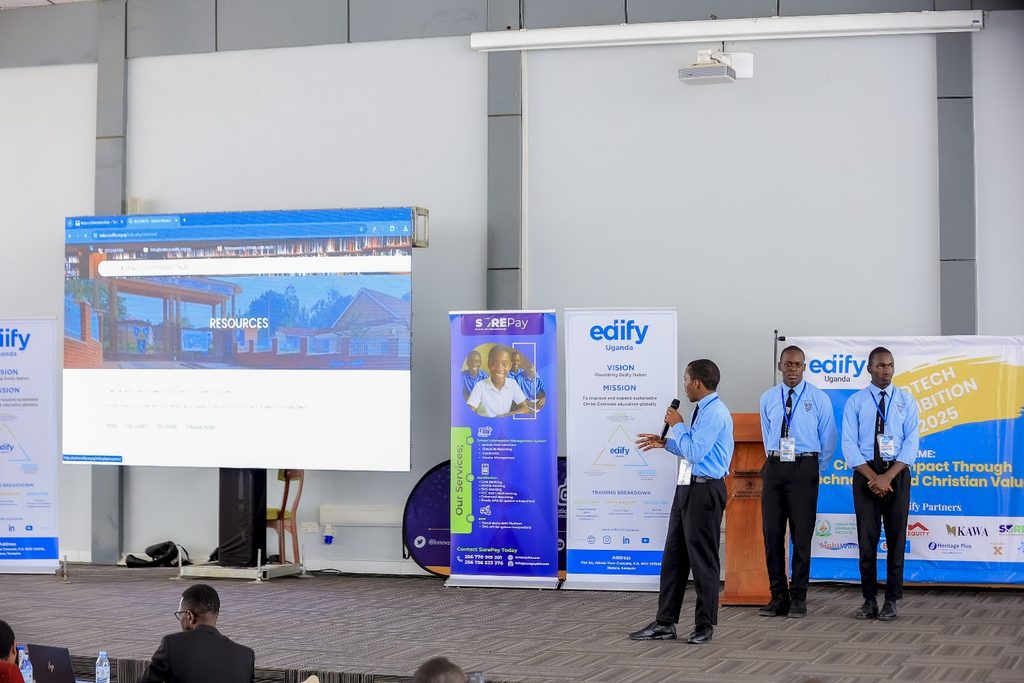
Learners showcase their innovations during the 2025 Edify EdTech Exhibition. The annual exhibition continues to provide a platform for young innovators.
Read about the Edify EdTech Exhibition 2025
A growing ecosystem of young innovators
The story of the Edify EdTech Exhibition is ultimately about more than projects, devices or software.
It is about creating opportunities for young people to discover that they can use technology to understand challenges around them and participate in developing solutions.
The 2026 exhibition brought together 26 shortlisted projects from primary and secondary schools, selected from more than 60 submissions. The projects ranged from educational applications and websites to digital safety solutions, environmental ideas, robotics, creative media and projects connected to Christian values.
The official programme also anticipated participation from learners and innovators from 30 schools, alongside EdTech Club patrons and teachers, school leaders, adjudicators, service providers, Edify staff, partners, vendors and special guests.
These numbers tell part of the story. The greater story is the growing confidence of learners to move from being technology users to becoming creators, problem-solvers and innovators.
Looking ahead
The Edify EdTech Exhibition 2026 provides another reminder that digital transformation in education begins with people.
It begins when a learner is encouraged to ask a question.
It grows when that learner is given access to digital tools, guidance and an opportunity to experiment.
It becomes meaningful when technology is used to address a real challenge.
And it becomes even more powerful when learners can explain their ideas, work with others, receive feedback and continue improving their solutions.
Through EdTech Clubs, practical digital skills and opportunities such as the national exhibition, Edify continues to create spaces where young people can explore these possibilities.
The projects presented in 2026 may continue to change and develop long after the exhibition itself has ended. Some ideas may become stronger school projects, others may inspire new solutions, and some learners may carry the skills they gained into future studies, careers and innovations.
The exhibition is therefore not simply a celebration of what learners have already achieved.
It is an invitation to imagine what they might create next.
The future of education will be shaped not only by the technology available to learners, but by what learners are empowered to do with it.
Through Christ-centered education, practical digital skills and opportunities to innovate, Edify is helping nurture a generation prepared to use technology with creativity, purpose, responsibility and faith in action.


Leave a Reply